



Komatsu WA250-6 Specs, Weight & Lift Capacity

The Komatsu WA250-6 is a machine you’ll see on everything from roadwork and commercial site prep to snow removal and municipal yards.

It’s not the biggest wheel loader in the lineup. It’s not the smallest. It sits right in that mid-size range that a lot of contractors rely on daily.

If you’re researching the WA250-6, you’re likely comparing specs, checking lift capacity, or making sure it fits your application.

Here’s what you should know before putting one on your job site.

Rear view of 2010 Komatsu WA250-6 showing counterweight and tires

Komatsu WA250-6 Overview

The Komatsu WA250-6 is a mid-size wheel loader built for everyday production work. It sits between smaller utility loaders and larger production machines, making it a common choice for contractors who need versatility without stepping into a heavier class.

It’s designed to handle consistent loading, stockpiling, snow clearing, and material movement without being oversized for tighter job sites. That balance is what makes it popular across road construction, commercial site prep, aggregate yards, and municipal operations.

The WA250-6 focuses on three things: steady power, fuel efficiency, and operator visibility. It’s not meant to be a high-tonnage quarry machine. It’s built for reliable, repeatable daily work where cycle time and maneuverability matter.

Before diving into the detailed specs, it helps to understand that this machine is typically chosen for balance. Not maximum size. Not minimum size. Just the right capacity for a wide range of mid-scale applications.

Komatsu WA250-6 Specs Overview

  • Operating weight: Approx. 25,500–27,000 lbs
  • Engine: Cummins 6.7L 
  • Horsepower: 140 HP
  • Bucket capacity: 2.5–4 cubic yards
  • Rated safe operating capacity: ~8,000–9,000 lbs
  • Static Tipping Load at full turn: 21,880 lbs
  • Breakout force: Varies by configuration
  • Top speed: Approx. 25 mph
Front bucket view of 2010 Komatsu WA250-6 showing cutting edge and bucket width

Core Specs & Performance of the Komatsu 250-6

Once you understand where the Komatsu WA250-6 fits in your loader lineup, the next step is looking at its core operating numbers.

Engine & Power

The WA250-6 is powered by a Komatsu SAA6D107E-1 (made by Cummins) engine producing roughly 140  horsepower.

That puts it in a range where it can handle steady production loading, snow clearing, and truck loading without stepping into heavier fuel consumption territory.

It’s built for consistent torque delivery rather than peak horsepower. So essentially, that means smooth power during repetitive loading cycles.

Operating Weight

Depending on configuration, the Komatsu WA250-6 typically weighs between 25,500 and 27,000 pounds.

Weight matters for two reasons:

  • Stability during lifting
  • Transport planning between job sites

It’s heavy enough to stay planted during material handling but still manageable for transport compared to larger production loaders.

Bucket Capacity

Standard bucket capacity generally falls between 2.5 and 4 cubic yards, depending on setup and material type.

This range makes it suitable for:

  • Aggregate
  • Sand and gravel
  • Snow
  • General site material
  • Manure

The bucket configuration you choose will directly affect lift performance and cycle efficiency.

Lift Capacity

Rated operating capacity typically falls in the 8,000 to 9,000 pound range, depending on configuration.

As with any loader, exact lift performance depends on:

  • Bucket size
  • Counterweight setup
  • Tire selection
  • Load centre

Always confirm the specific configuration you’re working with.

Loader arm hydraulics on 2010 Komatsu WA250-6 viewed from cab

Dimensions & Transport Specifications

Beyond power and lift capacity, physical size matters just as much. The Komatsu WA250-6 sits in a range that balances stability with maneuverability.

Overall Length

Approximately 23 to 24 feet with bucket installed, depending on configuration.

This gives it enough reach for efficient truck loading while still being manageable on mid-size job sites.

Overall Width

Roughly 8 to 9 feet wide, depending on tire selection.

Width plays a major role in:

  • Transport planning
  • Access to tighter urban sites
  • Municipal street and snow operations

Always confirm tire configuration when planning transport.

Overall Height

Typically just over 10 feet to the top of the cab.

Height clearance becomes important for:

  • Shop access
  • Indoor storage
  • Low bridge considerations

Wheelbase

Approximately 9 to 10 feet.

Wheelbase impacts stability during lifting and overall ride smoothness during loading cycles.

Transport Considerations

At roughly 26,000 pounds operating weight, the WA250-6 is generally transportable without stepping into oversized production-class territory.

However, transport requirements will depend on:

  • Local provincial regulations in Western Canada
  • Trailer rating
  • Bucket removal during hauling
  • Tire configuration

Compared to larger loaders like a WA320 or WA380, the WA250-6 is easier to move between job sites while still delivering solid production capability.

2010 Komatsu WA250-6 with front bucket at low angle showing bucket capacity

Purchase Price, Fuel Efficiency & Operating Costs

How Much Does a Komatsu WA250-6 Cost?

The purchase price of a Komatsu WA250-6 depends heavily on year, hours, and condition.

Used WA250-6 (10,000–15,000 hours):

  • Typically $70,000 – $95,000 CAD

Older units with higher hours will fall toward the lower end. Well-maintained machines with service records command more.

Mid-hour units (5,000–9,000 hours):

  • Generally $95,000 – $130,000 CAD

Condition, attachments, and regional demand will influence price.

Low-hour or late-model WA250 units:

  • Often $130,000 – $180,000+ CAD

Market demand, emissions tier, and dealer inventory can push pricing higher.

Fuel Consumption

The WA250-6 is built for efficiency within the mid-size loader class it offers: 

High performance SAA6D107E-1 engine Electronic heavy duty common rail fuel injection system provides optimum combustion of fuel. This system also provides fast throttle response to match the machine’s powerful tractive effort and fast hydraulic response. Net: 103 kW 138 HP.

The high-torque engine and HST with maximum efficiency in the low-speed range provide low fuel consumption  

The efficiency of HST motors HST provides quick travel response and aggressive drive into the pile. The variable displacement system automatically adjusts to the tractive effort demand to provide maximum power and efficiency. When high drive torque is needed, both motors are engaged to provide highest torque. Maximum rim pull can provided from zero travel speed. This combination makes the loader very aggressive and quick at digging, climbing or initiating movement. When high travel speed is needed, clutch cuts off the low speed motor to eliminate drag and achieve excellent fuel efficiency.  

Fuel efficiency is one reason contractors choose the WA-250-6 for their operations. 

Maintenance & Service Costs

Operating costs extend beyond fuel.

Key cost factors include:

  • Routine maintenance (filters, fluids, scheduled service intervals)
  • Tire replacement
  • Hydraulic system wear
  • Brake and drivetrain components

As machines accumulate hours, maintenance planning becomes critical. Higher-hour units may come at a lower purchase price but carry increased service risk.

Total Cost of Ownership

When evaluating a WA250-6, most buyers should consider:

  • Purchase price
  • Financing costs
  • Insurance
  • Fuel consumption
  • Maintenance and parts
  • Downtime risk

A lower upfront price does not always equal lower long-term cost.

That’s why many contractors compare buying versus renting, depending on utilization rates and project timelines.

Left side engine compartment of 2010 Komatsu WA250-6 with panels open

Ideal Applications & Best Use Cases for the Komatsu WA250-6

The Komatsu WA250-6 is built for mid-range production work. It’s not a compact utility loader, and it’s not a high-tonnage quarry machine. It fits in the middle, where versatility matters more than raw size.

Here’s where it’s most commonly used.

Road Construction

The WA250-6 works well for:

  • Loading tandem and tridem trucks
  • Managing aggregate stockpiles
  • Shoulder work and base material handling

It has enough lift capacity and breakout force for steady loading without stepping up to a larger, higher-fuel-burn machine.

Commercial Site Development

For commercial builds and site prep, the WA250-6 handles:

  • Backfilling
  • Material movement
  • General earthmoving support
  • Job site cleanup

Its size allows it to move efficiently around mid-size sites without feeling oversized.

Snow Removal & Winter Operations

This loader class is commonly used for:

  • Parking lot snow clearing
  • Municipal street work
  • Snow stockpile management
  • Salt and sand handling

It offers a balance between pushing power and maneuverability, which is important in tighter winter environments.

Aggregate Yards & Material Supply

In sand and gravel yards, the WA250-6 is often used for:

  • Loading customer trucks
  • Stockpile rotation
  • Bin loading

It’s well-suited for consistent daily cycles without being overbuilt for moderate production levels.

Municipal Operations

Municipalities often choose this size for:

  • Yard material handling
  • Snow operations
  • Utility support work
  • Seasonal equipment flexibility

It’s large enough to be productive, but manageable for mixed-use tasks throughout the year.

When It Might Not Be the Right Fit

The WA250-6 may not be ideal for:

  • High-volume quarry production
  • Large-scale mining operations
  • Applications requiring extended reach or significantly higher lift capacity

In those cases, stepping up to a larger loader class may make more sense.

2010 Komatsu WA250-6 side profile parked in Alberta field showing loader arm and bucket

Komatsu WA250-6 vs Other Wheel Loader Options

When evaluating the WA250-6, it’s helpful to understand where it sits compared to other machines in the same range.

WA250-6 vs WA320

The WA320 steps up in both horsepower and operating weight. It’s built for heavier production loading and larger aggregate operations.

Compared to the WA250-6, the WA320 typically offers:

  • Higher lift capacity
  • Larger bucket options
  • Increased breakout force
  • Greater overall weight and stability

The tradeoff is higher fuel consumption and transport weight.

If your operation requires consistent truck loading at higher volumes, the WA320 may make more sense. If you need versatility and easier mobility between sites, the WA250-6 often fits better.

WA250-6 vs WA380

The WA380 moves firmly into production-class territory.

It’s designed for:

  • Large aggregate pits
  • High-cycle production loading
  • Heavier daily workloads

Compared to the WA250-6, the WA380 is significantly larger in operating weight, horsepower, and capacity.

For mid-size contractors or municipal work, the WA250-6 is typically more practical. The WA380 is better suited for high-output environments.

Comparable Wheel Loader Models

If you’re evaluating the Komatsu WA250-6, it’s often compared to other mid-size wheel loaders in the 2.5 to 4.0 cubic yard class. Comparable models across major brands include:

John Deere

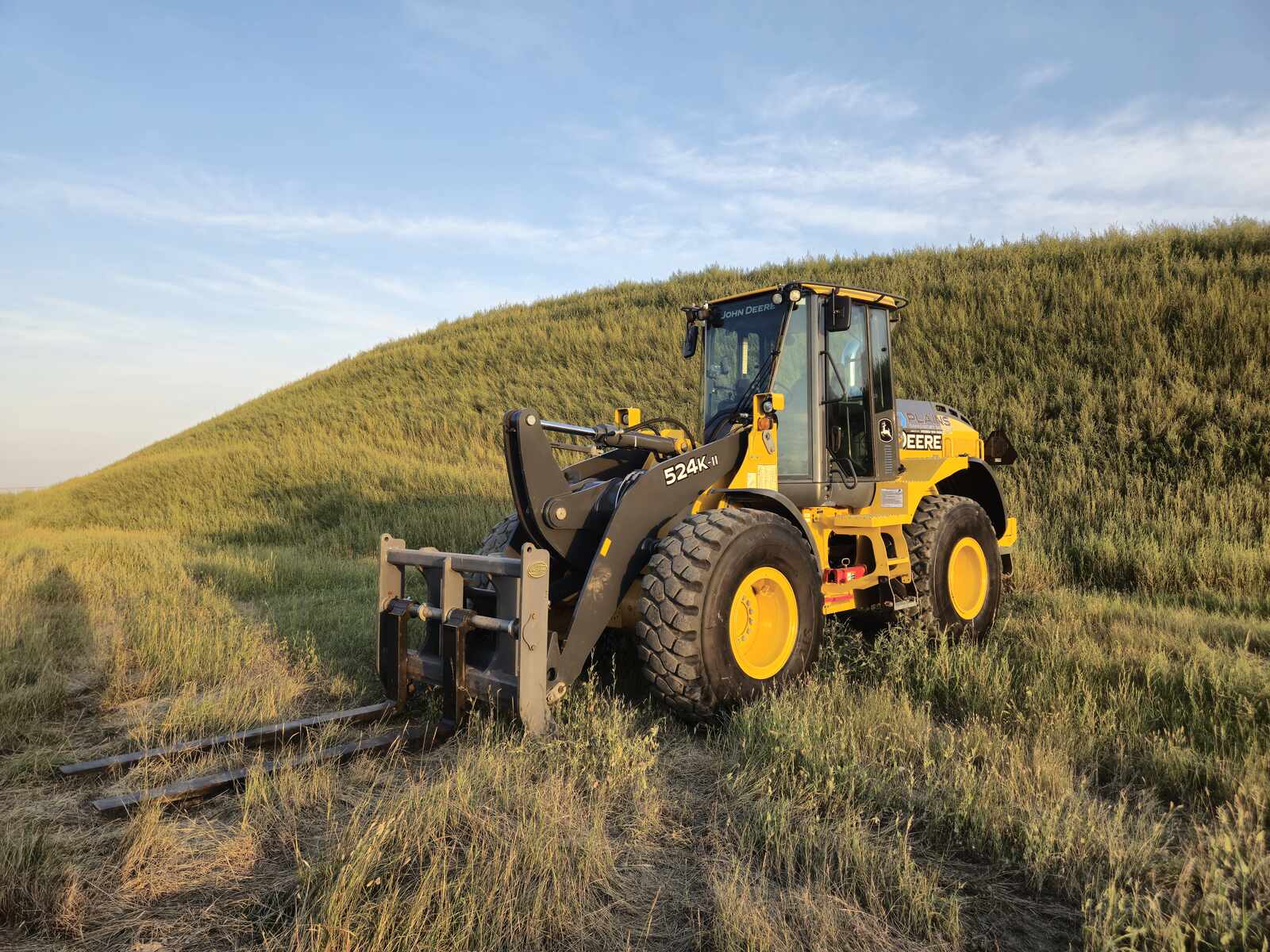
  • John Deere 524
  • John Deere 544
  • John Deere 624

CASE

  • CASE 621
  • CASE 721

Hyundai

  • Hyundai HL740
  • Hyundai HL757
  • Hyundai HL940
  • Hyundai HL955

Caterpillar

  • CAT 924
  • CAT 930

Doosan

  • Doosan DL250
  • Doosan DL300

Volvo

  • Volvo L60
  • Volvo L70

JCB

  • JCB 426
  • JCB 436

These machines generally fall within a similar operating weight, horsepower, and bucket capacity range as the WA250-6. Differences typically come down to:

  • Engine output and torque characteristics
  • Lift geometry and breakout force
  • Fuel efficiency
  • Operator cab design
  • Dealer support and regional availability

When comparing across brands, focus on the application first. Production requirements, material type, transport logistics, and long-term operating cost often matter more than minor spec differences.

Final Thoughts on the Komatsu WA250-6

The Komatsu WA250-6 sits in a practical middle ground within the wheel loader lineup.

It offers enough horsepower and lift capacity for steady production work, while remaining manageable in terms of transport, fuel use, and job site maneuverability. That balance is what makes it a common choice for road construction, site development, snow operations, aggregate yards, and municipal fleets.

It’s not built for extreme high-tonnage production. It’s built for consistent, everyday performance in mid-size applications.

If you’re evaluating the WA250-6, the key factors to consider are:

  • Required lift capacity
  • Job site space constraints
  • Transport logistics
  • Production demands
  • Total cost of ownership

When those factors align, the WA250-6 can be a solid fit within its class.

Share:

More Posts

More
articles