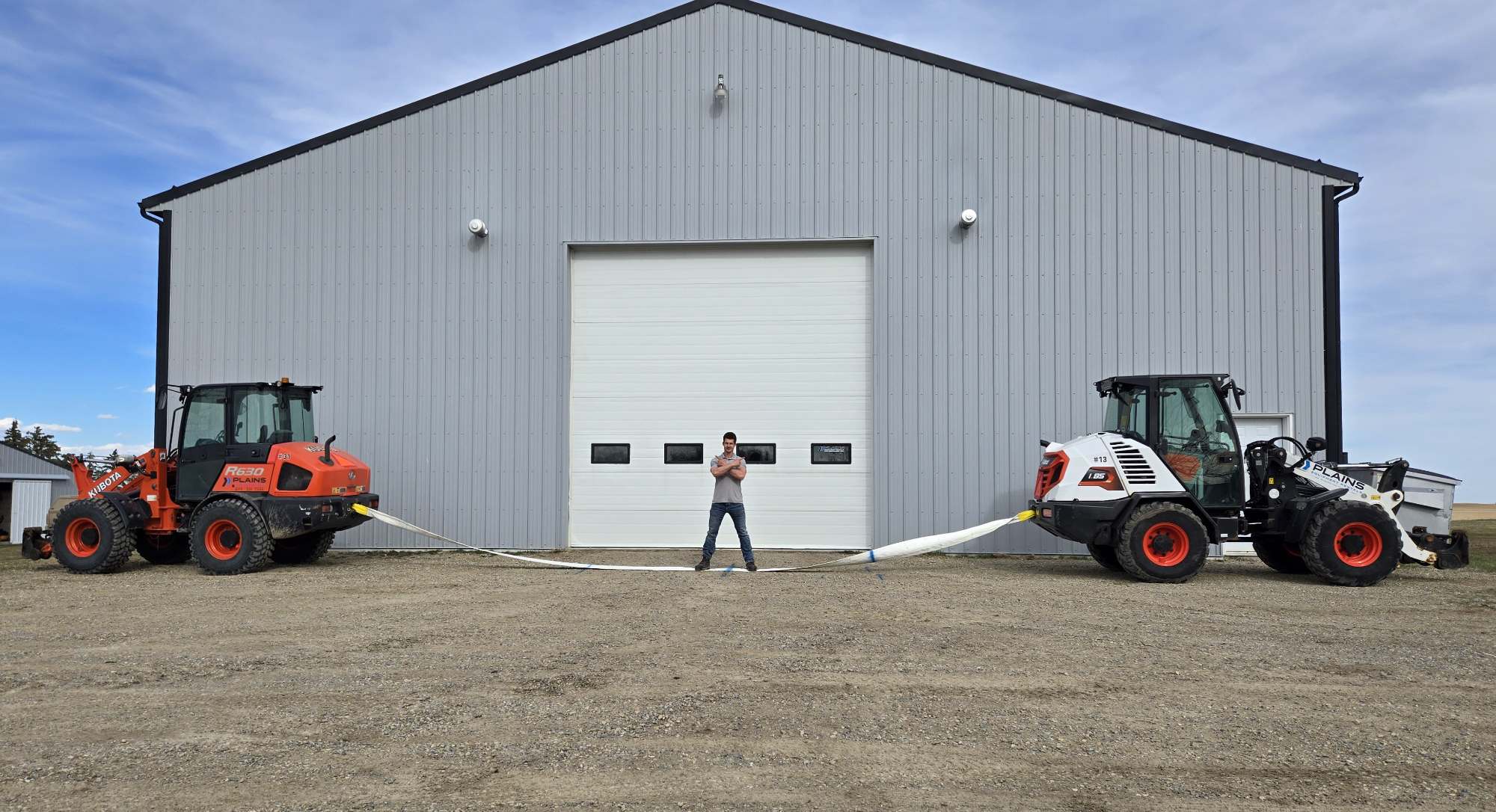
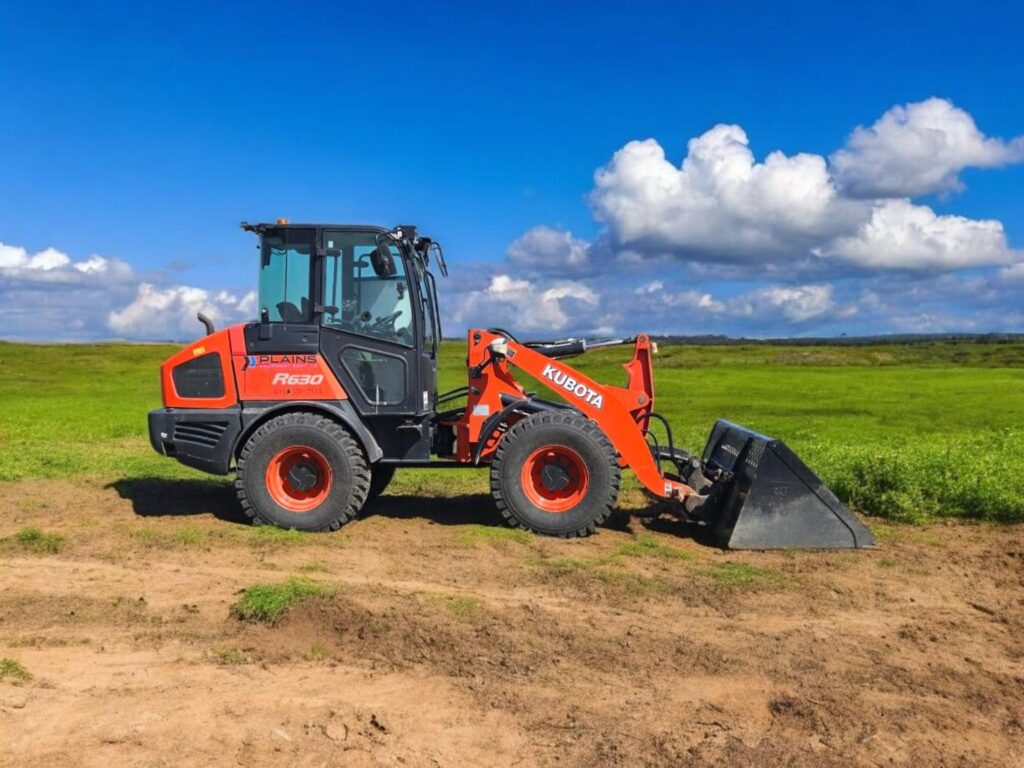
Two of the most talked-about compact wheel loaders in the equipment rental space right now. Both articulated, both built for tight quarters, both punching above their weight class. But they’re not the same machine.
If you’re choosing between the Kubota R640 and the Bobcat L85 for your next project, whether that’s snow removal, material handling, landscaping, or general site work, this breakdown covers the specs, the real-world differences, and what operators are actually saying about each one.
Table of Contents
Quick Overview: Where These Two Machines Sit
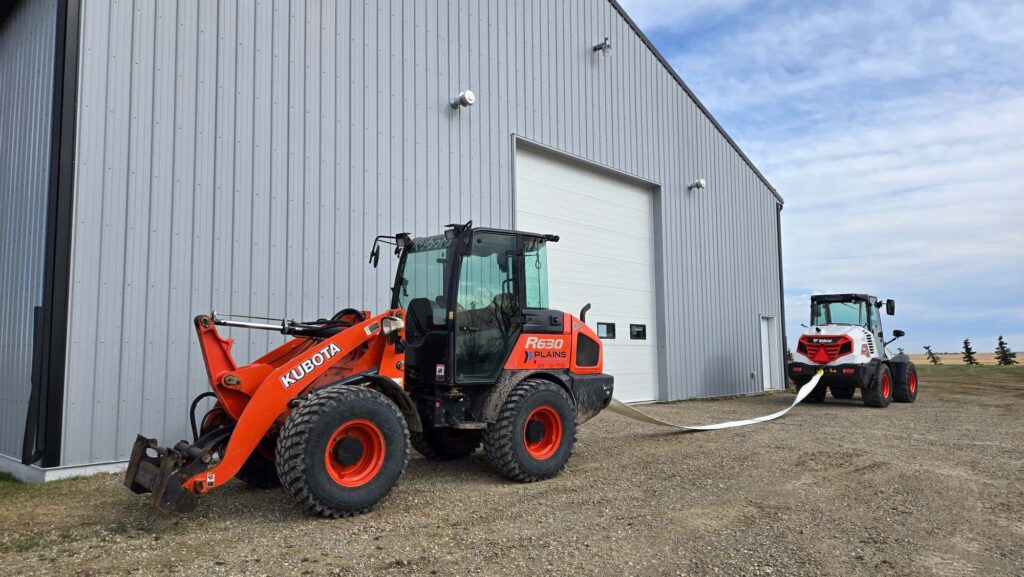
Both the Kubota R640 and Bobcat L85 are articulated compact wheel loaders. They occupy the same general class: machines built for lift-and-carry work in spaces where a full-size loader won’t fit, but where a skid steer doesn’t give you enough capacity or visibility.
That said, they come from two very different manufacturers with different design priorities, and those differences show up in the specs, the cab, and the long-term ownership experience.
Kubota R640 vs Bobcat L85: Side-by-Side Specs
| Specification | Kubota R640 | Bobcat L85 |
|---|---|---|
| Gross Engine Power | 64.3 hp (48.0 kW) @ 2,400 rpm | 68.0 hp (50.7 kW) @ 2,400 rpm |
| Engine | Kubota V2607-CR-TE5-WL (2,615 cc) | Bobcat 2.4L (Tier 4, no DPF/SCR) |
| Operating Weight | 11,177 to 11,563 lb (5,070 to 5,245 kg) | 11,164 lb (5,063 kg) |
| Tipping Load (Straight, Bucket) | 7,452 to 7,760 lb (3,380 to 3,520 kg) | 7,947 lb (3,605 kg) |
| ROC (50%, Bucket) | 3,263 to 3,406 lb (1,480 to 1,545 kg) | 3,974 lb (1,802 kg) |
| ROC (60%, Pallet Forks) | 3,064 to 3,197 lb (1,390 to 1,450 kg) | 4,786 lb (2,171 kg) |
| Standard Bucket Capacity | 0.94 yd³ | 1.25 yd³ |
| Max Hinge Pin Height | 10 ft 8 in (3,255 mm) | 127.9 in / 10 ft 8 in (3,250 mm) |
| Max Travel Speed | 12.4 mph (20.0 km/h) | 16.3 mph (26.3 km/h) |
| Breakout Force | 8,526 lb (37.9 kN) | Not published (Z-Bar linkage) |
| Auxiliary Hydraulic Flow | 17.8 gpm (67.2 L/min) | 27.3 gpm (103.5 L/min) high flow |
| Auxiliary Hydraulic Pressure | 2,973 psi (20.5 MPa) | 2,973 psi (20.5 MPa) |
| Articulation Angle | 40° (each direction) | 40° |
| Ground Clearance | 13 in (340 mm) | 12.3 in (312 mm) |
| Overall Height (Cab) | 8 ft 2 in (2,500 mm) | 98.3 in / 8 ft 2 in (2,498 mm) |
| Overall Length (Bucket) | 18 ft 0 in (5,480 mm) | 220.0 in / 18 ft 4 in (5,589 mm) |
| Overall Width (No Bucket) | 5 ft 11 in (1,805 mm) | 70.9 in / 5 ft 11 in (1,800 mm) |
| Wheelbase | 4 ft 7 in (1,400 mm) | 82.7 in / 6 ft 11 in (2,100 mm) |
| Transmission | Hydrostatic | Electronic Hydrostatic (E-HST) |
| Differential Lock | 100% on demand, front and rear | Standard, front and rear |
| Fuel Tank | 18.5 gal (70 L) | 20.8 gal (79 L) |
| Emission Standard | Tier 4 Final (with DPF) | Tier 4 (no DPF, no SCR) |
| Loader Raise/Lower Time | 5.8 / 3.9 sec | Not published |
| ROPS/FOPS | Standard (Level 1) | Standard (Level II) |
| Tire Size | 405/70R18 | 405/70R18 |
Spec ranges on the R640 reflect canopy vs cab configurations. Bobcat L85 specs are based on cab configuration with standard tires.
Engine and Emissions: A Meaningful Difference
This is where these two machines diverge in a way that matters on the job.
The Kubota R640 runs a 2,615 cc V2607 direct-injection diesel with common rail injection. It produces 64.3 gross hp and meets Tier 4 Final emissions using a DPF muffler. Kubota has improved the DPF service intervals on this generation, but it’s still a component you’ll maintain over the life of the machine, and having the wait for a regen isn’t always convient.
The Bobcat L85 runs a 2.4L Bobcat-branded engine producing 68.0 hp. Bobcat achieves Tier 4 compliance without a DPF or SCR system. No diesel particulate filter means no regeneration cycles, no regen downtime, and fewer components to service. For rental fleets and operators who run these machines hard in dusty or cold conditions, that’s a real advantage.
From a pure horsepower standpoint, the Bobcat has 3.7 more hp. In practice, the difference is negligible. What matters more is the emissions approach: simpler maintenance on the Bobcat side, proven Kubota reliability on the other.
Operators on Reddit and equipment forums frequently describe Kubota engines as “bulletproof.” The R640’s V2607 has a strong track record, and Kubota’s fuel recirculation system and improved DPF intervals reduce the maintenance burden. But for operators who want to avoid DPF issues entirely, the L85’s no-DPF architecture is the cleaner path.
Lifting Capacity and Loader Performance
Both machines reach roughly the same hinge pin height (10 ft 8 in), but the Bobcat L85 carries more weight to that height.
The L85’s rated operating capacity with a bucket (at 50% tipping load) is 3,974 lb compared to the R640’s 3,263 to 3,406 lb. That’s roughly a 570 to 710 lb advantage for the Bobcat. With pallet forks at 60%, the gap widens further: 4,786 lb for the L85 vs 3,064 to 3,197 lb for the R640.
The L85 also runs a larger standard bucket (up to 1.25 yd³ vs 0.94 yd³ on the R640), which means more material per cycle in stockpile work or truck loading.
The Kubota R640 counters with a published breakout force of 8,526 lb and an arm tilt/parallel movement structure that keeps loads level through the lift cycle, which is particularly useful for pallet fork work. Both machines use articulated steering with 40-degree articulation, so manoeuvrability is comparable.
If your primary work is lift-and-carry with heavy loads or high-volume material handling, the L85 has the edge on capacity. If breakout force and digging performance matter more, the R640’s published numbers give you a concrete benchmark.
Hydraulics and Attachment Versatility
The Bobcat L85 has a clear advantage here.
Standard high-flow hydraulics on the L85 deliver 27.3 gpm compared to the R640’s 17.8 gpm. That’s 53% more hydraulic flow, which translates directly to faster cycle times and better performance with hydraulic attachments like angle brooms, augers, and tillers.
Both machines run the same auxiliary hydraulic pressure (2,973 psi), so the force at the attachment is comparable. But the higher flow rate on the L85 means hydraulic attachments run at closer to their rated performance.
The Bobcat L85 uses Bobcat’s Power Bob-Tach attachment mounting system, which lets operators swap non-hydraulic attachments from the cab. It also includes a dual-direction detent for continuous hydraulic flow in either direction. The compatible attachment list includes angle brooms, augers, snow blades, snow pushers, tillers, pallet forks, and multiple bucket types.
The Kubota R640 accepts SSL-type and Euro-type quick couplers (both optional), and includes a multi-function operating lever with proportional AUX control. The attachment ecosystem is solid but not as integrated as Bobcat’s purpose-built system.
If attachment versatility is a core part of how you use a compact wheel loader, the L85’s higher flow, Power Bob-Tach, and the broader Bobcat attachment lineup give it an edge.
Travel Speed
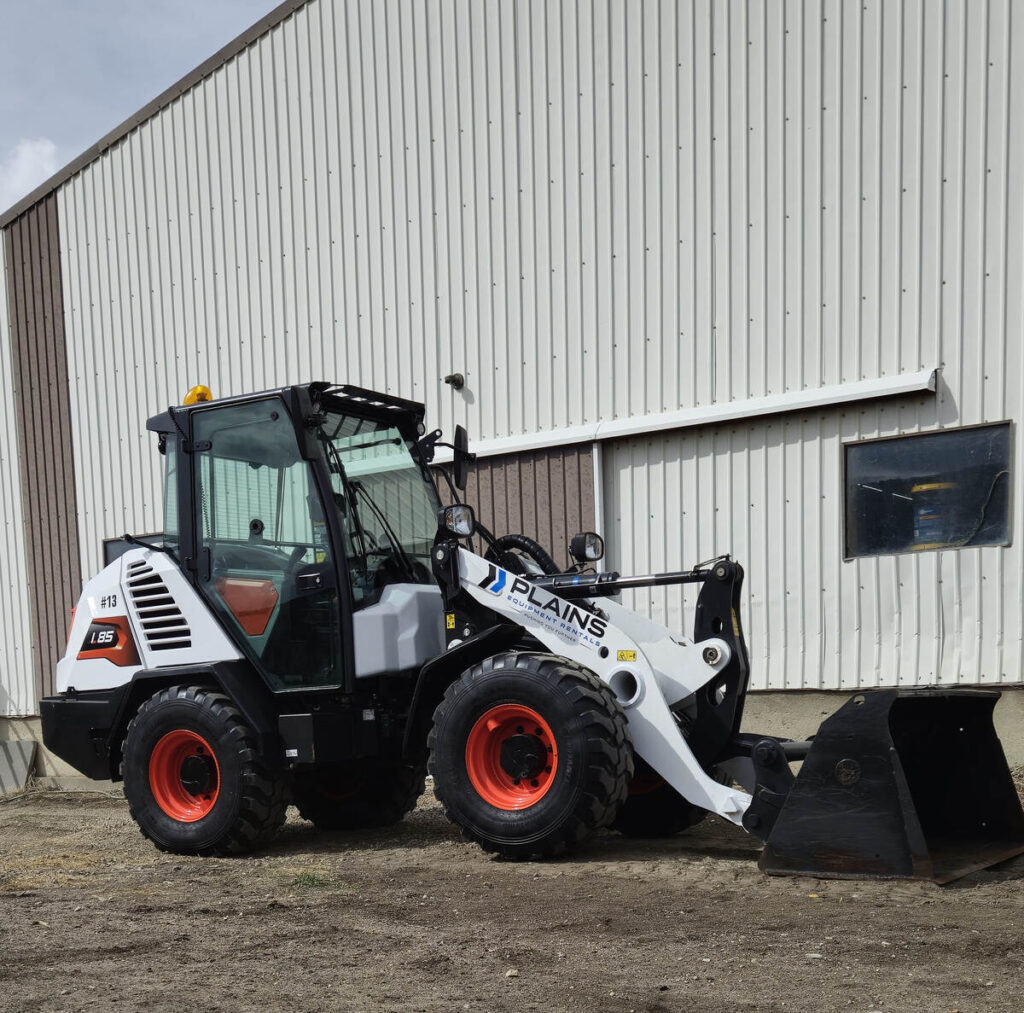
The Bobcat L85 tops out at 16.3 mph (26.3 km/h) compared to the R640’s 12.4 mph (20.0 km/h). That’s a 31% faster top speed, which matters if you’re travelling between work areas on a large site or moving between job sites on public roads.
The L85 also offers three drive modes (Travel, Smooth, and Flex) that let operators match travel behaviour to the task. Travel mode maximizes speed. Smooth mode gives mild acceleration for carrying loads. Flex mode lets you control engine speed independently from travel speed, which is useful for attachment work where you need consistent hydraulic flow regardless of ground speed.
The R640 uses a two-step speed control switch on the multi-function lever. It’s straightforward, but doesn’t offer the same level of drive mode customization. Many prefer the snappy acceleration it hydrostatic transmission provides, making it feel more torque and less electronic.
Cab and Operator Experience
Both machines have made real investments in cab comfort for this class of equipment.
The Kubota R640 features a fully enclosed glass cabin with panoramic visibility, a full-suspension seat, adjustable wrist rest, tilt steering, and 11 HVAC vents. The full glass door and wide-opening right window give strong sightlines to the sides. The cabin is designed for all-day operation with an emphasis on visibility, particularly with pallet fork tips visible from the driver’s seat.
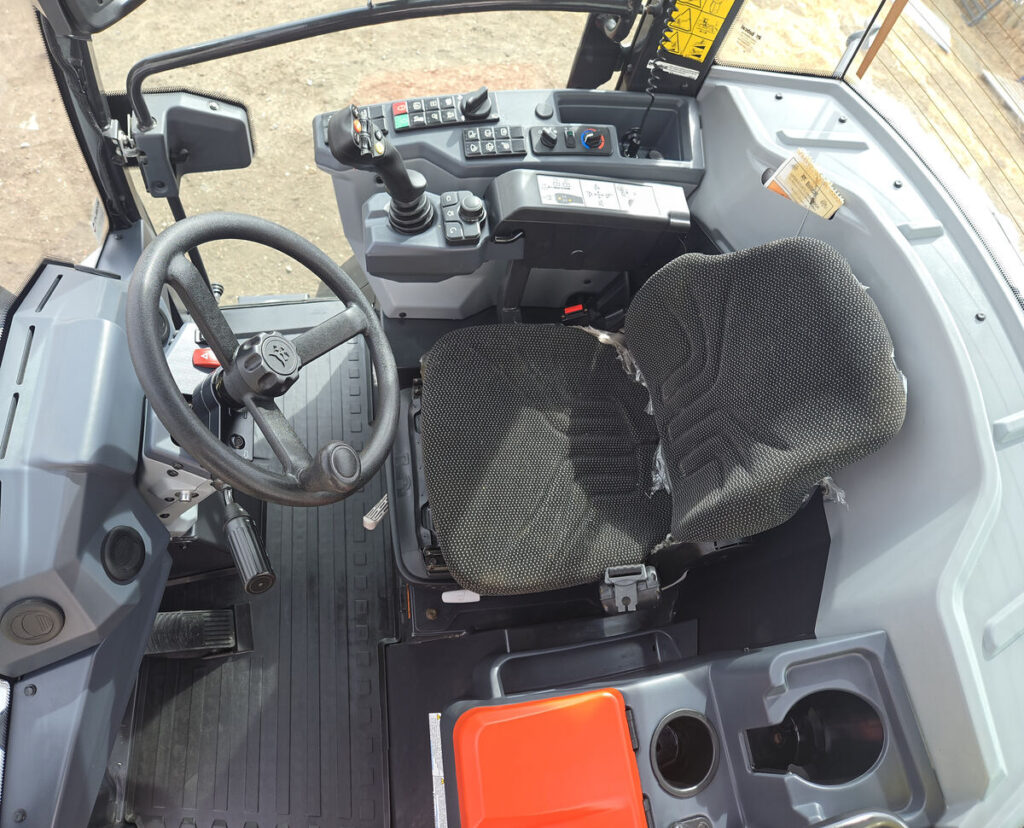
The Bobcat L85 cab is ROPS/FOPS Level II certified and features a pressurized environment that repels dust. It includes a cloth suspension seat, seat-mounted joystick with adjustable armrest, fingertip controls, a 5-inch display with full diagnostics, and a password-protected keyless start system. The L85 also offers a rearview camera option integrated into the display.
Operators on forums consistently describe the Bobcat cab as “quiet” and comfortable. The pressurized cab keeps dust out more effectively than most competitors in this class. The Kubota cabin’s glass-enclosed panoramic design gets high marks for visibility, which matters in confined work areas.
Both cabs are genuinely good. The Bobcat prioritizes dust exclusion and modern tech (keyless start, rearview camera integration, operator profiles) making it easier to clean and keep clean. The Kubota prioritizes visibility and simplicity. If your operators spend long days in dusty conditions, the pressurized Bobcat cab has an advantage. If visibility in tight quarters is the priority, the Kubota’s glass cabin design is hard to beat.
Snow Removal Performance
Both machines are commonly used for snow removal across Western Canada, and both handle it well.
The Bobcat L85’s higher travel speed (16.3 mph vs 12.4 mph) means faster repositioning between pushes. The three drive modes let operators switch between travel mode for repositioning and smooth mode for pushing. Standard high-flow hydraulics also mean powered snow attachments (angle brooms, snow pushers) run at full performance. Bobcat’s cold-weather starting system uses fuel recirculation to prevent fuel gelling, which is a real advantage in Alberta winters.
The Kubota R640’s delta-shaped boom is praised by operators for snow work. It provides strong side-load handling and good visibility over the bucket. The optional Kubota Shockless Ride (KSR) system absorbs boom movement during travel, reducing spillage and improving operator comfort on long pushes. Kubota’s proven cold-weather reliability is well documented and has withstood the test of time, whereas Bobcat’s new-to-the-market engine is still proving itself.
For high-volume commercial snow removal, the L85’s speed and hydraulic flow give it an edge. For operators who value visibility and ride quality during long snow shifts, the R640’s boom design and optional KSR are worth considering if your sites are all within close proximity.
Maintenance and Serviceability
Both machines are designed for easy daily maintenance, but the approaches differ.
The Kubota R640’s rear engine bonnet opens wide for access to the air cleaner, battery, DPF muffler, fuel filter, water separator, and reserve tank. Quick-open side panels provide access to fuel and battery. The digital diagnostic indicator monitors critical conditions, with slightly less access and room under the hood than the L85, it’s still far easier to work on over a skid steer. Kubota’s parts availability through the Canadian dealer network is solid.
The Bobcat L85 features a gas-assisted tailgate with nearly 180 degrees of service access. The 2.4L engine shares design characteristics with other Bobcat equipment, so parts, filters, and fluids are widely available across the North American Bobcat dealer network, with even a few aftermarket options to choose from, keeping the dealer’s pricing competitive. Machine IQ telematics readiness lets you connect to remote monitoring for maintenance scheduling, machine tracking, and fleet analysis.
The biggest maintenance difference is the emissions system. The R640’s DPF requires periodic attention and some downtime. The L85’s no-DPF design eliminates that entirely. For fleets where simplicity and uptime matter most, that’s a meaningful factor.
On the dealer support side, Bobcat’s North American network is larger and more accessible in most markets. Kubota’s dealer network is strong in Canada but generally more concentrated in agricultural and rural markets. Both manufacturers stand behind their machines, but parts availability and service turnaround times can vary by region.
Dealer Support and Parts Availability
Operators on forums consistently flag dealer support as one of the most important factors in a compact wheel loader purchase or rental decision.
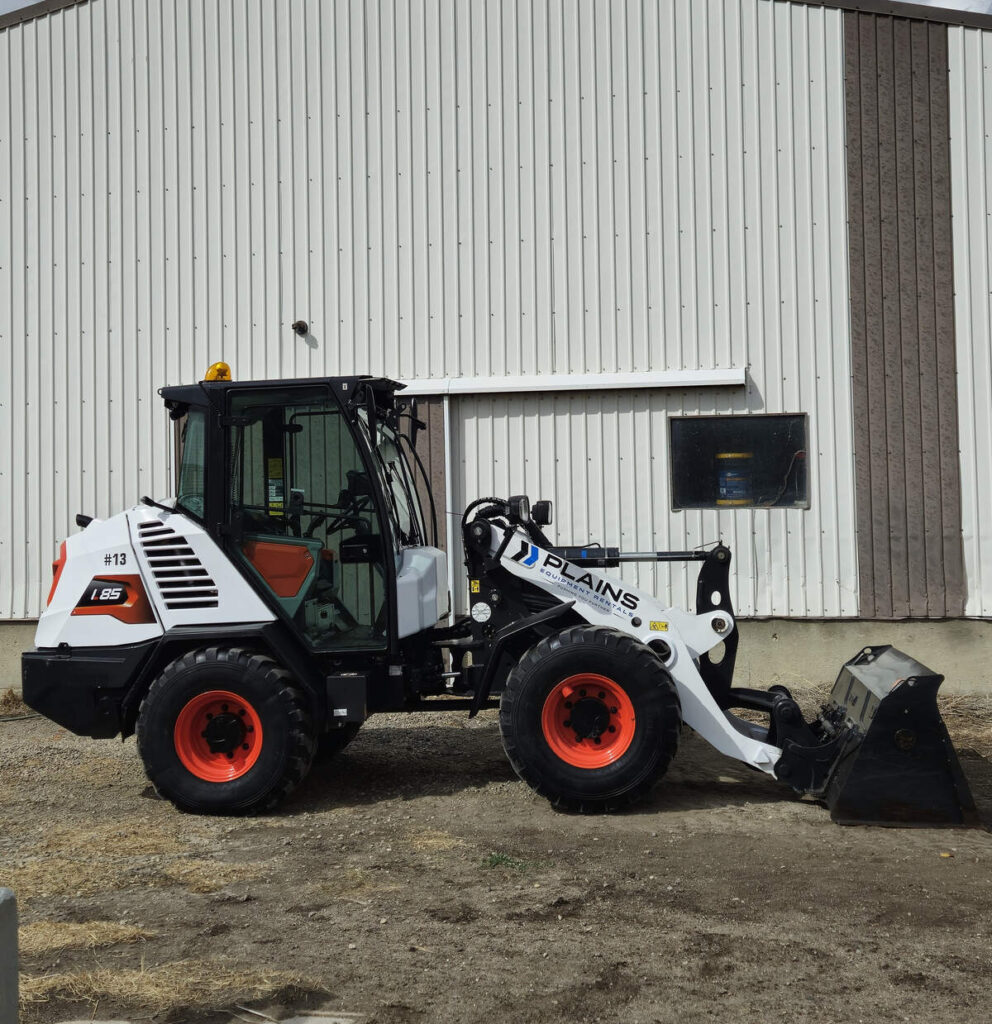
Bobcat’s dealer network across North America is extensive, and parts availability is a headline strength. The L85’s engine shares components with other Bobcat equipment, which means common filters, fluids, and service parts are almost always in stock at any Bobcat dealer. For companies running mixed Bobcat fleets, that’s a real logistical advantage.
Kubota’s Canadian dealer network is established and growing, with Kubota Canada headquartered in Pickering, Ontario. The Kubota V2607 engine family is widely used across Kubota’s product range, so engine parts are readily available. Where Kubota’s dealer presence is strongest (agricultural communities, mid-size markets), service is excellent. In larger metro areas, Bobcat typically has more locations.
Kubota R640 vs Bobcat L85: Which One Should You Choose?
Both are capable compact wheel loaders. The decision usually comes down to the specific application and what you value most.
Choose the Kubota R640 if:
- Long-term engine reliability is most imprant to you
- You work in tight, confined areas where the R640’s visibility and agility shine
- Breakout force and digging performance matter for your applications
- You value the delta boom design for snow removal or side-load handling
- Your operation is in a market where Kubota dealer support is strong
- You prefer a strong hydrostatic transmission over an electronic feeling drive system
Choose the Bobcat L85 if:
- You need higher rated operating capacity for lift-and-carry work
- Attachment versatility with high-flow hydraulics is important to your operation
- You want to avoid DPF maintenance entirely
- Faster travel speed matters for large sites or between-site moves
- Dealer network coverage and parts availability are critical to your uptime
- Your operators prefer a modern, quiet cab with keyless start and rearview camera options
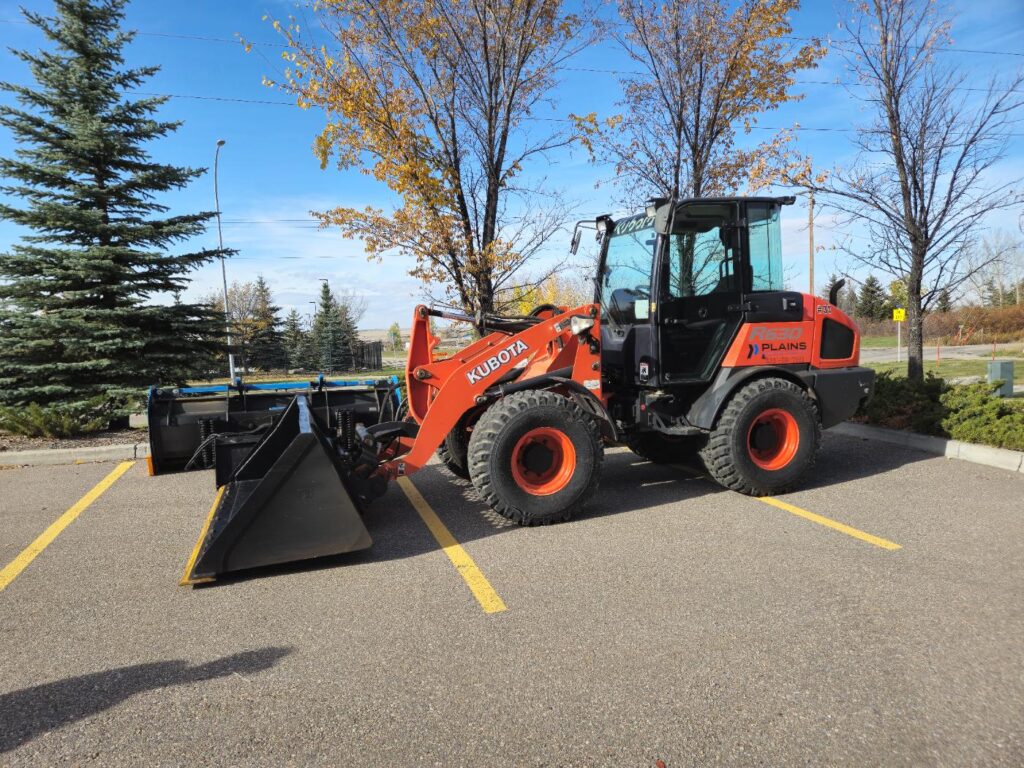
Rent the Kubota R640 or Bobcat L85 in Western Canada
Plains Equipment Rentals stocks both machines and can help you choose the right one for your project by letting you test it out and see which one matches your current situation and capabilities needed, so you can save the headache and resale cost if your impulse buy wasn’t the best decision. We use transparent, usage-based pricing so you’re paying for what you actually plan to use, not an inflated standard rate rental rate based on high usage.
We serve contractors and crews across Alberta and throughout Western Canada from our Edmonton, Calgary, and Lethbridge locations.
If you have questions about which machine fits your job, call us directly or fill out our form for a rental quote.