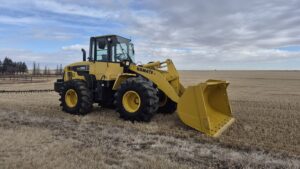
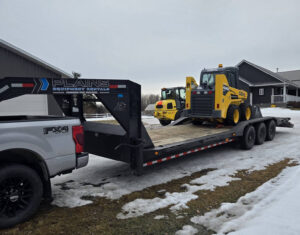
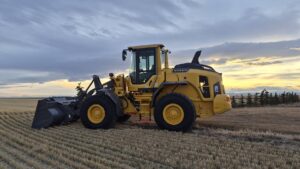
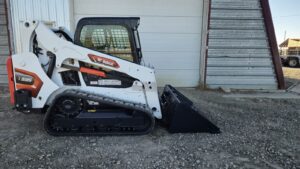
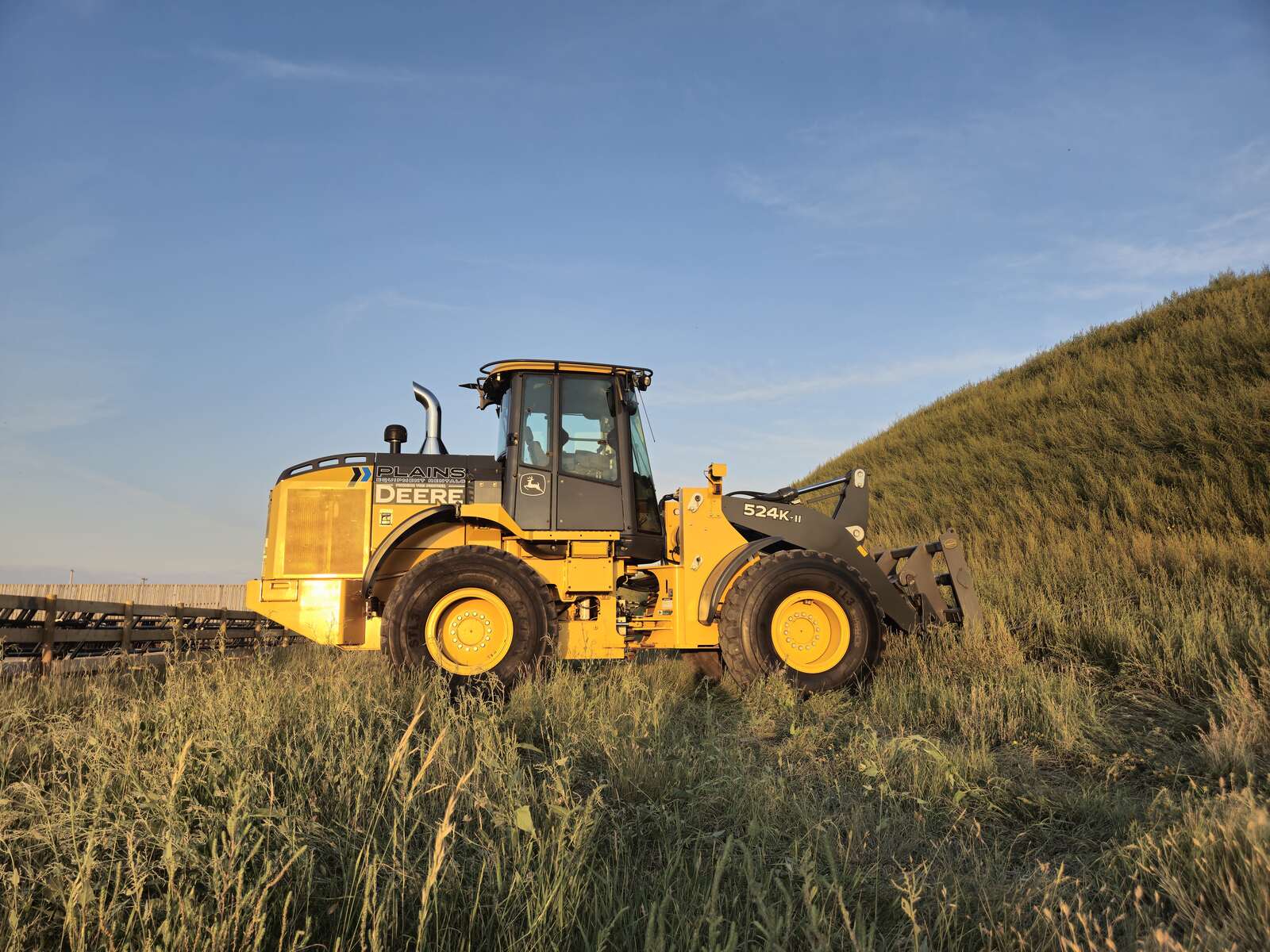
If you’ve been searching for John Deere 444 loader specs, you’re probably trying to figure out whether this machine fits your job. It’s a fair question. The 444 has been one of John Deere’s most popular mid-size wheel loaders for years, and the current P-Tier version is the most capable iteration yet.
We’ll break down exactly what the John Deere 444P delivers: engine specs, bucket capacity, operating weight, lift capacity, and the features that actually matter on a job site. We’ll also cover what the P-Tier designation means and where this machine excels.
If you need a John Deere 444 loader for rent in Alberta or across Western Canada, Plains Equipment Rentals has you covered.
Table of Contents
What Is the John Deere 444 P-Tier?
The 444 P-Tier is John Deere’s current mid-size wheel loader in the 444 model line. The “P-Tier” designation stands for “performance tier” part of John Deere’s tiered product naming system introduced in recent years. P-Tier sits above the base-level L-Tier and K-Tier machines, offering more advanced technology, operator comfort features,fuel efficiency, hydraulic performance and connectivity options.
What actually changed on the 444 P-Tier vs 444K
Typical upgrades include:
Performance
- Improved engine efficiency
- Faster hydraulic response
- Better power delivery
Cab and controls
- Larger touchscreen display
- Updated electrohydraulic controls
- More adjustable operator settings
Technology
- Advanced onboard diagnostics
- JDLink integration standard
- Better machine monitoring
Operator comfort
- Improved seat and suspension
- Better visibility
- Quieter cab
In plain terms: it’s a refined, tech-forward version of an already proven platform. The core machine is the same reliable mid-size loader contractors have trusted for decades. The P-Tier adds more intelligent controls, better ergonomics, and improved uptime features.
The 444P is a 2.5 to 4.5 cubic yard machine with 138 gross horsepower and an operating weight of approximately 26,639 lbs (12,083 kg). It sits in the mid-size category, making it versatile enough for construction, snow removal, aggregate handling,landscaping,or farm operations.
John Deere 444P Specs at a Glance
Engine Specs
| Specification | Value |
|---|---|
| Engine Model | John Deere PowerTech PSS 4045D |
| Engine Type | 4-cylinder diesel |
| Net Horsepower | 124 HP (92 kW) at 2,100 RPM |
| Max Torque | 392 ft-lb (532 N-m) at 1,400 RPM |
| Displacement | 276 cu in (4,523 cc) |
| Emissions Tier | Final Tier 4 |
| Fuel Tank Capacity | 60 gal (220 L) |
Bucket Capacity and Lift
| Specification | Value |
|---|---|
| Bucket Capacity (Heaped SAE) | 2.5 to 4.5 cu yd (1.9 to 3.4 m3) |
| Operating Weight | 25,814 lb (11,709 kg) -27,670 lb (12,551 kg) |
| Max Forward Speed | 21.9 mph (35.3 km/h) |
| Max Reverse Speed | 15.3 mph (24.6 km/h) |
| Hydraulic Pump Flow (max) | 36 GPM (136 LPM) at 2,300 RPM |
| System Pressure | 3,600 psi (248 bar) |
| Hydraulic Reservoir | 21.7 gal (82.1 L) |
Transmission
| Specification | Value |
|---|---|
| Transmission Type | Countershaft Powershift |
| Shift Control | Load and speed-dependent automatic |
| Gear Ranges | 4 Forward / 4 Reverse (electronic control) |
What Does P-Tier Mean for John Deere?
John Deere reorganised its equipment tiers a few years back. The P-Tier (“Performance Tier”) designation specifically means the machine includes more advanced operator technology and connectivity than entry-level options.
For the 444P, that translates into a few practical upgrades worth knowing about:
- Customisable multi-function controls: Both multi-function buttons on the joystick can be configured with up to 10 different functions, including bucket vibrate for precise dump control and EH Precision Mode for fine hydraulic metering.
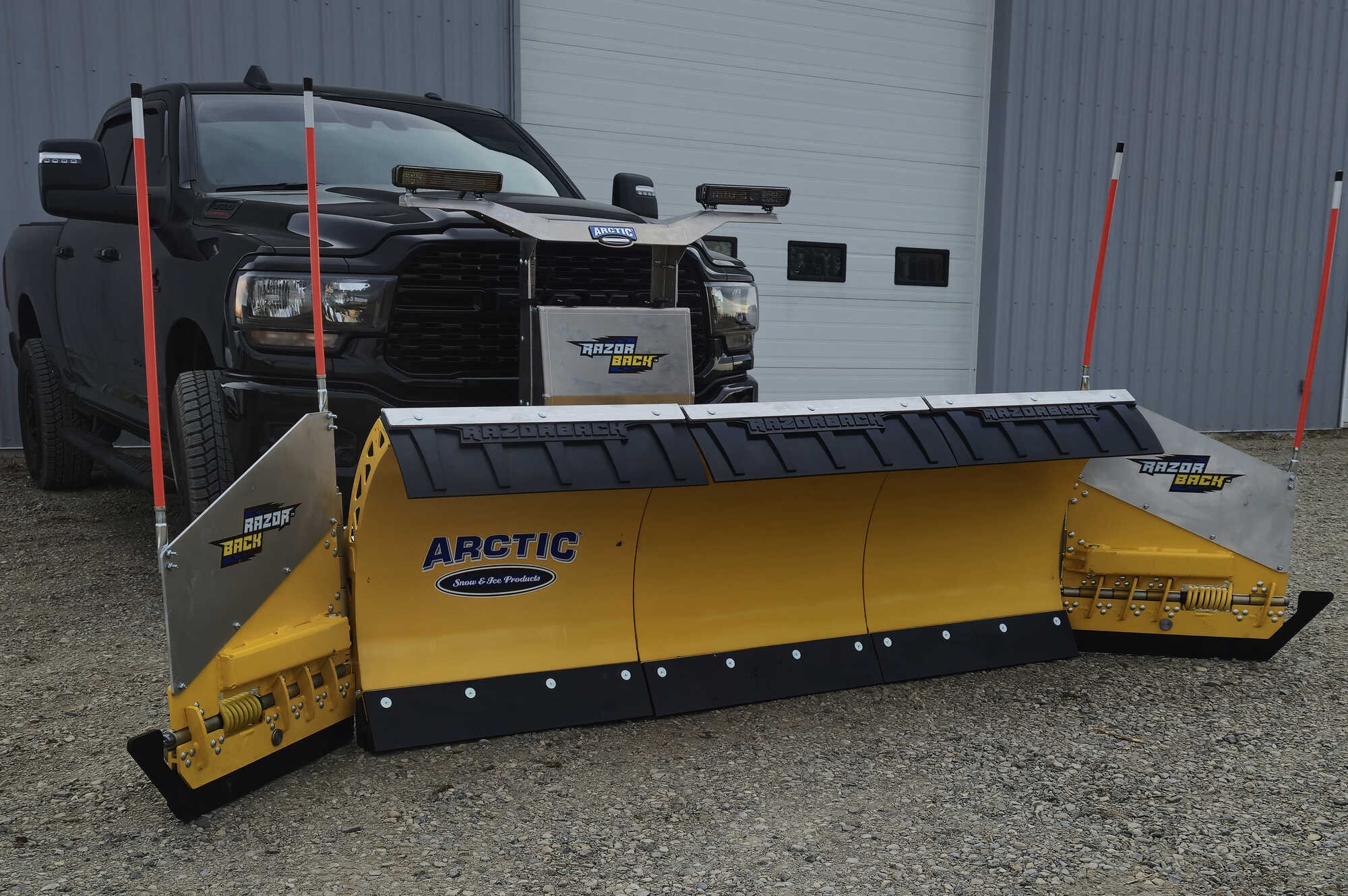
- Attachment memory: The machine can store up to 10 different attachment configuration settings directly on the monitor. If you’re swapping between a bucket, a grapple, and a snow pusher, you’re not resetting flow and responsiveness every time.
- SmartWeigh payload system: An optional integrated weighing system that measures bucket load in real time without needing to stop and recalibrate. Accuracy is within plus or minus 1.5 percent.
- JDLink telematics: Remote machine monitoring for hours, location, fault codes, and fuel consumption. Useful for fleet managers or anyone running equipment on remote sites.
- Quad-Cool cooling system: John Deere’s boxed cooler arrangement isolates engine heat from the radiator, A/C condenser, hydraulic, transmission, and axle coolers. Easy access for cleaning out debris on both sides.
What Is the Bucket Capacity of a John Deere 444 Loader?
The John Deere 444P accepts buckets ranging from 2.5 to 4.5 cubic yards, depending on the application and material density.
For general purpose work with a standard bolt-on cutting edge bucket, most operators run the 2.5 yard configuration. For lighter materials like wood chips or silage, larger buckets in the 3.5 to 4.5 yard range make sense.
The machine’s tipping load and breakout force determine what it can safely lift and curl at any given bucket size. If you’re loading heavy aggregate, a smaller, denser bucket is the right call. If you’re moving snow or light material at volume, go with a larger bucket and keep your cycle times up.
How Much Does a 444 Loader Weigh?
The John Deere 444 P-Tier has an operating weight of approximately 25,814 lbs or 11,709 kg – 27,670 lb (12,551 kg)
. That includes the cab, rear counterweight, and a full fuel tank.
Weight will vary depending on attachments. Adding a heavier bucket, a coupler, or counterweighting the rear will affect the actual tipping load calculations. If you’re working near rated capacity, always account for your specific configuration.
What Is Considered High Hours on a Wheel Loader?
This comes up a lot, especially when looking at used machines. For a mid-size wheel loader like the 444, general industry benchmarks put the threshold around 12,000 to 16,000 hours for a well-maintained machine. High hours do not automatically mean a worn-out machine, but it does mean you need to look harder at maintenance records, undercarriage condition, hydraulic health, and transmission service history.
For wheel loaders used in abrasive environments like gravel or demolition, wear components like cutting edges, bucket lips, and hydraulic cylinders see more stress per hour than a machine used for snow removal or light material handling.
If you’re renting rather than buying, this is a non-issue. A reputable rental company maintains its fleet proactively and swaps equipment out before reliability becomes a concern.
544P vs 444P: What’s the Difference?
The John Deere 544P is the next two sizes up in the mid-size lineup. It pushes into the 3.0 to 5.5 yard range with more horsepower and higher tipping loads. If your primary work involves heavier material or you need to consistently load bigger trucks, the 544P is worth considering.
The 444P is the right machine when you need agility and versatility in tighter sites. It’s lighter, more manoeuvrable, cheaper and still carries significant bucket capacity for most contractor applications. Snow removal, site cleanup, material handling, and aggregate loading all fall squarely in the 444P’s wheelhouse.
What are comparable machines in?
Some comparable machines in the same year range and within 5,000lb operating weight to the JD 444P are as follows;
- John Deere 524 and 544P
- Case 521 and Case 621G
- Hyundai 930 and 940
- JCB 427 437
- Develon (Doosan) 220
- Cat 926 930
- Volvo L60H L70H
- Komatsu WA200 WA270
Rent a John Deere 444 Loader in Alberta and Western Canada
Plains Equipment Rentals carries wheel loaders across Western Canada, including mid-size machines suited for the same applications as the John Deere 444P. We work with contractors, municipalities, and owner-operators across Edmonton, Calgary, Lethbridge, and beyond.
Whether you need a wheel loader for a week or six months, we’ll match you to the right machine for your job, and request a rental quote today.