When you’re running construction, municipal, or snow operations, you don’t need the biggest wheel loader on the market. You need one that shows up, runs consistently, and handles the kind of work your crews deal with every day. That’s exactly where the John Deere 524K wheel loader fits.
The 524K is a mid-size loader built for real job sites, not spec-sheet bragging rights. It delivers the lift capacity, stability, and control contractors expect from John Deere, without stepping into a larger machine that costs more to run and is harder to maneuver in tight spaces. From material handling and roadwork to yard loading and winter operations, the 524K is designed to be reliable, predictable, and easy for operators to run all day.
Here, we break down what the John Deere 524K actually does well, how much it can lift, where it fits best, and what contractors should consider before putting one on a job. Just the information you need to decide if this loader is the right fit for your work.
Table of Contents
What the John Deere 524K Is Built For
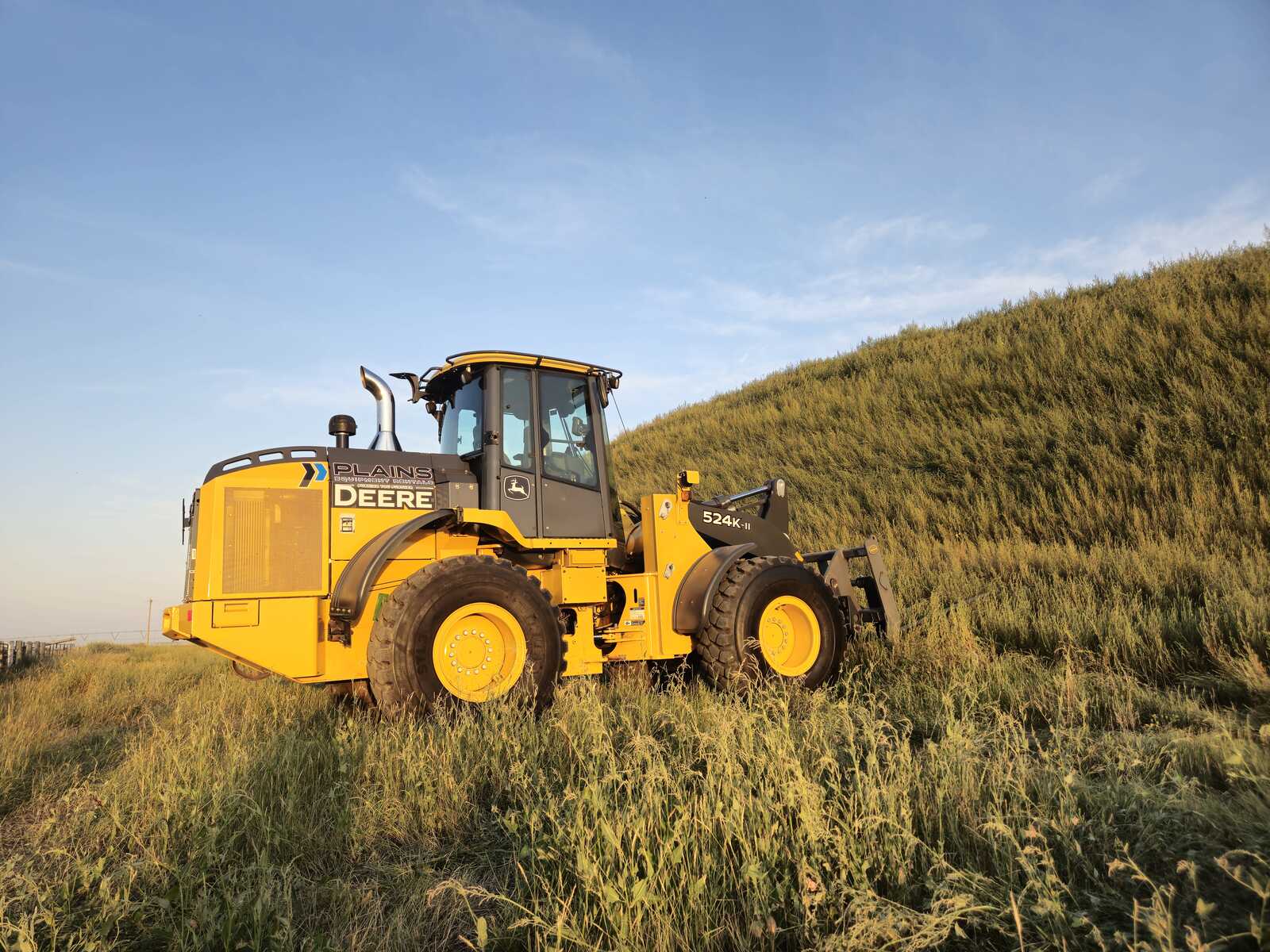
The John Deere 524K is built for contractors and municipalities that need one wheel loader to handle a wide range of tasks without overcomplicating things. It sits squarely in the mid-size class, which makes it versatile enough for daily production while still being manageable on tighter sites.
This is the type of loader that works well when your jobs change week to week. One day it’s loading aggregate or moving pallets, the next it’s handling yard work or supporting a road crew. The 524K has the weight and hydraulic power to stay stable under load, but it’s not so large that it becomes inefficient or awkward to move around urban or municipal environments.
John Deere designed the 524K with consistency in mind. Operators get smooth, predictable controls, good visibility, and a machine that feels familiar from the first shift. That matters when you’re rotating operators or bringing in seasonal crews and don’t have time for a long learning curve.
Simply put, the 524K is built for everyday job-site work. It’s not a specialty machine and it’s not overbuilt for one specific task. It’s a reliable, all-around wheel loader that fits construction, municipal, and snow operations across Western Canada.
Key Specs That Matter on a Job Site
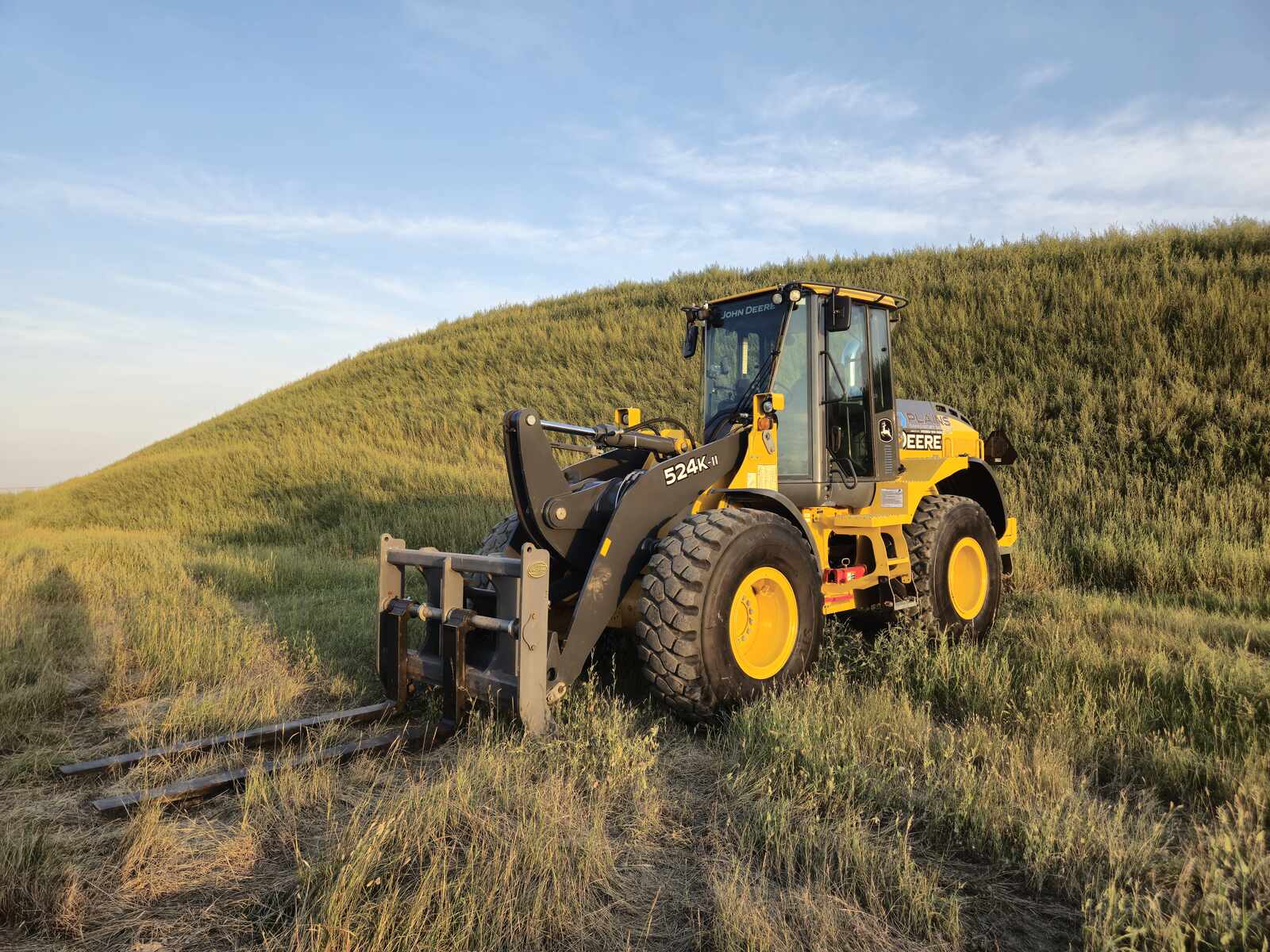
Specs only matter if they translate into real performance. The John Deere 524K isn’t about headline numbers. It’s about balance, stability, and predictable output during long workdays.
Operating Weight
The 524K typically runs in the (27,928 lb to 29,000 lb range, depending on configuration, tires, and attachments. That weight gives the loader the stability it needs when handling aggregate, pallets, or snow attachments, without making it clumsy in tight spaces.
For contractors, this means fewer compromises. The machine stays planted under load but is still nimble enough for municipal yards, roadwork zones, and urban construction sites.
Engine Power
Powered by a John Deere diesel engine producing roughly 140 horsepower, the 524K delivers steady power without excessive fuel consumption. It’s built to run efficiently at working RPMs, which is exactly where most loaders spend their time.
On site, that translates to smooth acceleration, controlled pushing power, and consistent hydraulic response throughout the shift.
Bucket Size and Dump Height
Most 524K setups run 2.5 to 3 cubic yard buckets, which are well matched to the machine’s size and lift capacity. This keeps production steady without overloading the loader or stressing components.
Dump height on the standard lift configuration works well for typical construction and municipal trucks. For higher-sided trucks or aggregate yards, the high-lift option provides additional clearance and flexibility.
Travel Speed and Mobility
With a travel speed suited for job-site movement and municipal routes, the 524K is easy to reposition throughout the day. It’s not built to race between sites, but it moves efficiently enough to keep crews productive without constant transport logistics.

How Much Can a John Deere 524K Lift?
The John Deere 524K delivers an safe operating load in the 8,000 to 9,500 lb range, and has a tipping load, straight, with no tire deflection is 10 540 kg (23,237 lb, depending on configuration, bucket size, and whether the machine is equipped with a standard or high-lift linkage. That puts it right where most contractors need a mid-size wheel loader to perform day in and day out.
What That Means on a Real Job Site
In practical terms, the 524K is well suited for handling:
- Aggregate and gravel
- Palletized materials
- Asphalt and base materials
- Snow pushers, buckets, and blades
- General yard and utility loads
The machine stays stable under load and doesn’t feel light in the rear when lifting at height, which is a common issue with undersized loaders.
Standard Lift vs High Lift Performance
With the standard lift, the 524K is ideal for ground-level stockpiling, snow removal, and general material handling. It provides strong breakout force and predictable lift control.
The high-lift configuration increases dump height, making it better suited for truck loading and aggregate yard work. While lift capacity can vary slightly depending on setup, the high-lift option gives contractors more flexibility without stepping up to a larger machine class.
What the 524K Is Not Designed For
It’s worth being clear about limitations. The 524K is not intended to replace larger production loaders used in heavy quarry or high-volume loading operations. Its strength is consistency, control, and reliability in mid-size applications.
For most construction, municipal, and snow operations, the lift capacity of the 524K hits the sweet spot between performance and efficiency.

Standard Lift vs High Lift: Which One Do You Need?
Choosing between standard lift and high lift on the John Deere 524K comes down to the type of work you do most often. Both configurations are reliable, but they serve slightly different purposes on a job site.
Standard Lift Configuration
The standard lift 524K is the right choice when most of your work happens at ground level or involves frequent attachment changes. It’s commonly used for:
- Snow removal and winter operations
- Yard and municipal work
- Stockpiling material
- Utility and road construction support
Standard lift offers excellent breakout force and smooth control when working close to the ground. It’s also a bit simpler in operation, which makes it ideal for mixed crews and seasonal operators.
High Lift Configuration
The high-lift version of the 524K is designed for contractors who regularly load trucks or need additional dump height. It’s best suited for:
- Aggregate yards
- Truck loading
- Higher-sided construction and material trucks
High lift gives you more clearance without moving up to a larger loader class. For many contractors, it’s a cost-effective way to increase versatility while staying in a mid-size machine.
Which One Makes More Sense?
If your work is mostly snow, municipal, or general construction, standard lift is usually the better fit. If truck loading is a regular part of your operation, high lift is worth considering.
Either way, the 524K keeps the same core advantages: stable lift performance, predictable hydraulics, and a layout operators can get comfortable with quickly.

Attachment Compatibility and Versatility
One of the reasons the John Deere 524K works so well in mixed fleets is its attachment flexibility. Contractors and municipalities rarely run one brand or one attachment style across their entire operation, and the 524K is built to handle that reality.
The loader supports common ISO and JRB-style couplers, which makes it compatible with a wide range of attachments already in use on job sites. That means you’re not locked into obscure or dealer-only tools, and you’re not waiting around for specialized attachments to show up.
Common Attachments Used on the 524K
On real job sites, the 524K is commonly paired with:
- General-purpose buckets
- Snow buckets and snow pushers
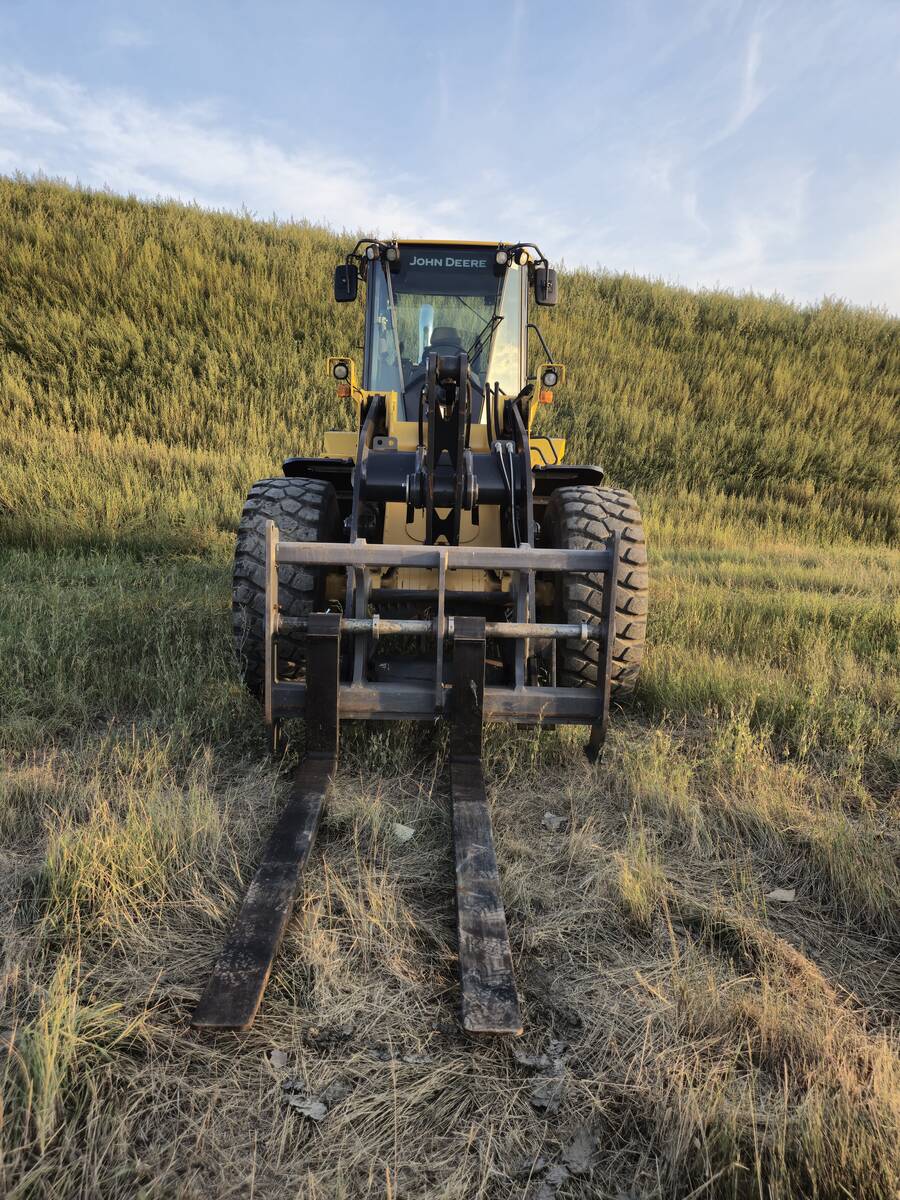
- Pallet forks
- Snow blades
- Light material grapples
This flexibility allows crews to switch tasks quickly without changing machines or slowing production.
Why Attachment Flexibility Matters
Being able to run standard attachments saves time and money. It reduces downtime when an attachment goes down, avoids unnecessary purchases, and keeps the loader productive across different seasons.
For contractors dealing with construction in the summer and snow removal in the winter, that versatility is a big advantage. The 524K adapts to the job instead of forcing the job to adapt to the machine.

Real-World Use Cases in Western Canada
The John Deere 524K is a common sight across Western Canada because it fits the type of work contractors and municipalities deal with every day. It’s not a specialty machine. It’s a dependable loader that performs consistently in changing conditions and across multiple seasons.
Construction and Roadwork
On construction sites, the 524K is used for:
- Loading aggregate and base material
- Supporting road crews and utility work
- Site cleanup and material movement
Its balance of weight and power makes it effective without getting in the way on tight or active sites. Operators can move material confidently without fighting the machine or constantly repositioning.
Municipal and Yard Operations
Municipal yards rely on the 524K for day-to-day tasks like:
- Handling sand, salt, and gravel
- Loading trucks and maintaining stockpiles
- General yard and facility work
The predictable controls and good visibility make it easy to operate safely in busy environments where crews, trucks, and pedestrians are moving around.
Snow Removal and Winter Work
For snow contractors and municipalities, the 524K is a strong winter performer. It handles:
- Snow buckets
- Pushers
- Plow attachments
- Cleanup and loading operations
The machine’s stability and hydraulic control make it well suited for heavy, wet snow and long winter shifts. Its size allows it to work efficiently on municipal routes, commercial lots, and yard areas without stepping into an oversized loader.
Why It Works So Well in This Region
Western Canada demands machines that can handle temperature swings, seasonal workloads, and long operating hours. The 524K’s durability, straightforward design, and versatility make it a reliable choice for crews who need equipment that works when conditions are less than ideal.
Strengths and Considerations of the JD 524K
The John Deere 524K has earned its reputation by being consistent and dependable, but like any piece of equipment, it’s important to understand where it shines and where it has limits.
Where the 524K Shines
One of the biggest strengths of the 524K is reliability. It’s a straightforward machine designed to run day after day without unnecessary complexity. Contractors appreciate:
- Predictable hydraulic response
- Stable lift performance under load
- A comfortable cab that reduces operator fatigue
- Familiar John Deere controls that shorten the learning curve
The 524K also fits well into mixed fleets. It works with common attachments, handles multiple job types, and doesn’t require specialized training to operate effectively.
Things to Be Aware Of
The 524K is not built for high-production quarry or large-scale material loading. Contractors doing heavy bulk loading or running oversized buckets may find it undersized for those applications.
Travel speed is solid for job-site and municipal work, but it’s not designed for frequent long-distance moves between sites without transport.
Understanding these considerations helps ensure the 524K is used where it performs best, which leads to better productivity and fewer frustrations on the job.
An Honest Take
For mid-size construction, municipal, and snow operations, the John Deere 524K delivers dependable performance without over complication. When it’s matched to the right work, it’s a machine crews trust and operators are comfortable running all shift.

FAQ: Straight Answers to the John Deere 524K Wheel Loader
Is the John Deere 524K good for snow removal?
Yes. The 524K is commonly used for snow removal with:
- Snow buckets
- Snow pushers
- Snow blades
Its stability, hydraulic control, and visibility make it a strong choice for municipal routes, yards, and commercial properties during long winter shifts.
What is considered high hours on a wheel loader like the 524K?
For a properly maintained wheel loader, 10,000 to 15,000+ hours is common before major overhauls. Maintenance, operator habits, and job conditions all play a big role in machine lifespan.
How much does a John Deere 524K cost?
A new John Deere 524K typically costs $280,000–$350,000+ CAD, depending on configuration and options. Clean, low-hour used units usually range from $170,000–$230,000 CAD, which is why many contractors choose to rent or buy used instead of purchasing new.
When Renting or Buying a John Deere 524K Makes Sense
The John Deere 524K is the kind of wheel loader that works well whether you need it short-term or plan to keep it in your fleet long-term. The right choice depends on how often you use it and what kind of work you’re running.
When Renting a 524K Makes Sense
Renting is often the smarter option when:
- The loader is needed for seasonal work, like snow removal
- You’re covering a short-term project or contract
- You want to avoid long-term maintenance and repair costs
- You need flexibility without tying up capital
With Plains Equipment Rentals, renting means on-time delivery, well-maintained equipment, and transparent pricing without hidden charges.
When Buying a 524K Makes Sense
Buying can be the right move if:
- You rely on a wheel loader year-round
- You want consistent access without scheduling rentals
- You’re building out a long-term fleet
- You’ve found a machine with the right hours and service history
We currently have a John Deere 524K available for sale, offering contractors the opportunity to add a proven, mid-size loader to their fleet without waiting on new equipment lead times.
The Bottom Line for the 524K
Whether you rent or buy, the John Deere 524K delivers dependable performance for construction, municipal, and snow operations across Western Canada. When it’s backed by a rental company that values transparency, maintenance, and real service, it becomes an even better investment.
If you’re deciding between renting or buying and want honest guidance, reach out. We’ll help you choose the option that actually makes sense for your operation.